PRACTICAL BUYER GUIDE
A 14-day dog weight and food log that records more than kilograms
Combine body weight, body and muscle condition, measured food, treats and symptoms so changes can be discussed with a veterinary team.
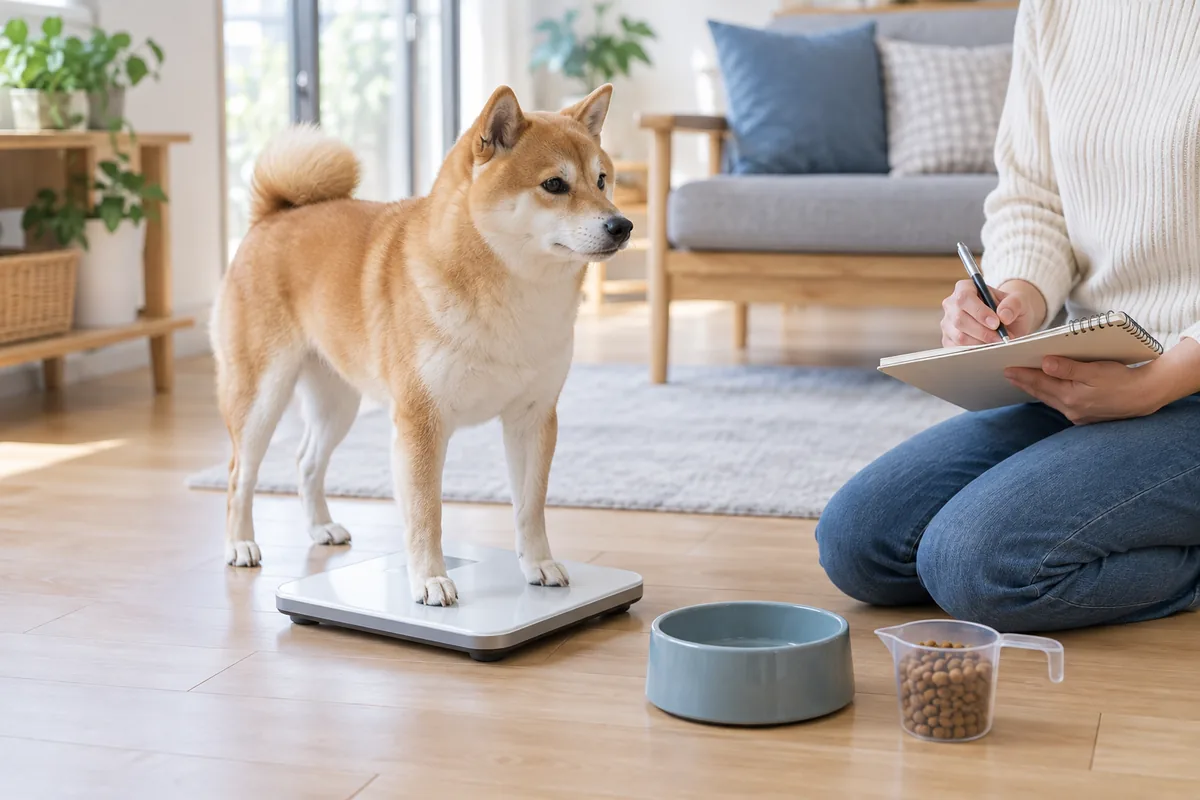
Weight is one measurement, not the whole assessment
AAHA nutrition guidelines pair body weight with body condition score and muscle condition score. Two dogs at the same weight can have different fat and muscle status, and an older dog may lose muscle with only a small change on the scale.
Ask the veterinary team to demonstrate how they assess the ribs, waist, abdominal tuck and muscle over the spine, shoulder blades, skull and pelvis. Home photographs can support a trend, but they do not replace palpation or a clinical examination.
Measure under comparable conditions
Use the same scale and, where practical, a similar time of day and relationship to meals and toileting. Record the method as well as the number. A safe clinic scale is more useful than forcing an anxious or unstable dog onto a small household scale.
A 14-day log is an organisational tool, not a diagnostic waiting period. Sudden weight loss, reduced appetite, repeated vomiting or diarrhoea, or a major change in drinking or urination warrants veterinary advice without waiting for the log to finish.
Count the full diet history
Record grams offered and left for each meal, plus treats, dental chews, toppers, table food, supplements and food used with medication. A family can measure the main food perfectly while unknowingly doubling extras. Setting aside the day’s treat allowance in one container makes shared feeding easier to see.
When changing foods, compare calories per 100 g and each product’s feeding guide. Equal grams or equal cups do not guarantee equal energy. A “light” or “lower fat” claim also does not define the correct portion for an individual dog.
Read the trend before changing the ration
Stable weight, body condition, muscle condition, appetite and stool support keeping the current plan and rechecking at an agreed interval. Repeated weight gain together with a less visible waist calls for a review of total intake, treats and activity.
Stable weight with apparent muscle loss, or weight loss despite a normal appetite, should not be managed by simply adding food. Bring the record to a veterinarian so disease, ageing and nutritional factors can be assessed together.
References
This guide uses the 2021 AAHA Nutrition and Weight Management Guidelines, AAHA canine body-condition resources and the WSAVA Global Nutrition Toolkit. Recommendations for an individual dog should come from the veterinary team that can examine that dog.