PRACTICAL BUYER GUIDE
When Japanese dog food arrives: a three-minute delivery check
Verify the exact product, inspect the package, photograph the date and lot code, and keep the evidence needed for a seller enquiry or recall check.
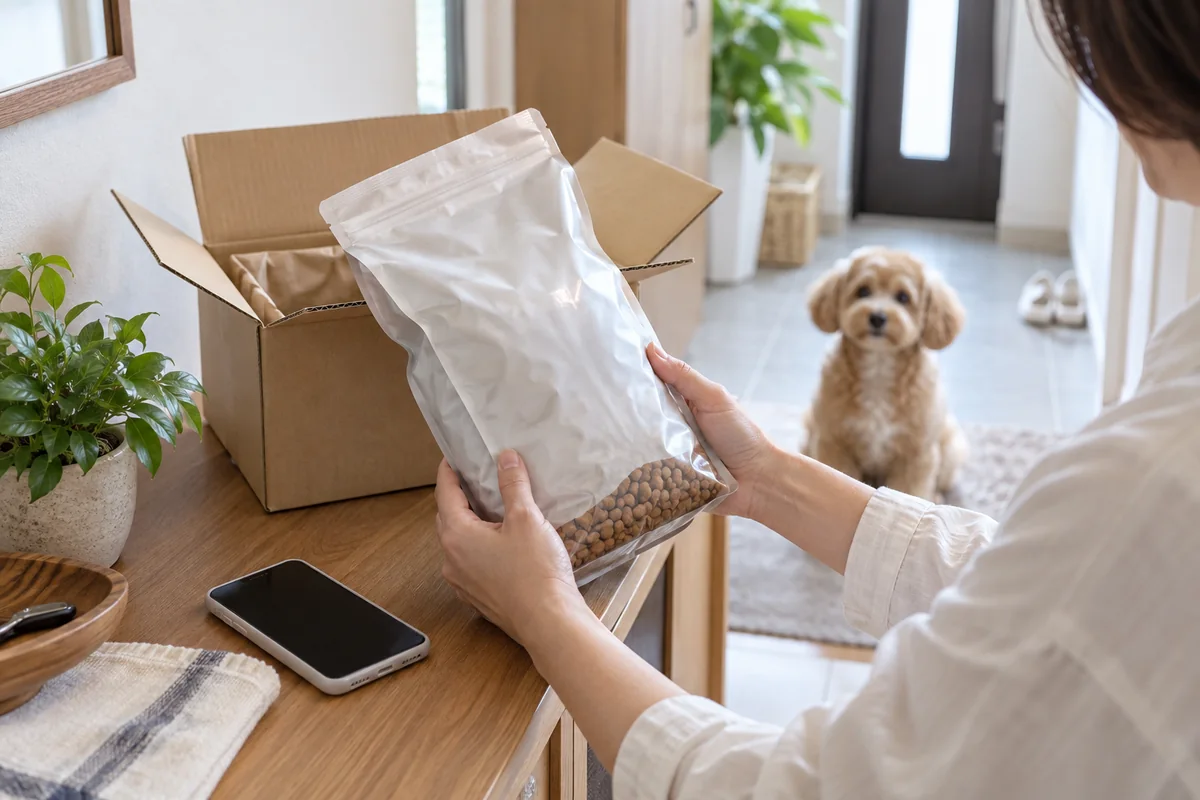
Match the order before opening
Compare the delivered product with the order history: exact name, flavour or formula, life stage, net weight and number of bags. Similar packaging may hide a different age range, breed size or lower-fat formula. Photograph the outer box, product front and back label before discarding anything.
If the delivered product is not what was ordered, leave it unopened and follow the merchant’s contact process. Marketplace thumbnail images are less reliable than the exact variant name and the physical package.
Inspect every layer of the package
Check bag seals for openings, punctures, tears, moisture or oil marks. Look for bulging or leaking cans and pouches, deep rust, or damaged seams. An intact shipping carton does not guarantee that the inner pack is unaffected.
Do not taste or feed food with a suspected off odour, unusual colour, mould, foreign material or insects. Photograph the whole product and close details, isolate it from other food, and contact the merchant or the responsible company shown on the label.
The date, barcode and lot code are different
The best-before date relates to expected quality under the stated storage conditions. A barcode identifies a product type. A lot code helps trace a specific production batch and may appear near the date, on a bag seam or side, or on the bottom of a can. Its format and position vary.
The U.S. FDA describes the lot code as crucial for matching a complaint or recall to the manufacturing time and plant. If you cannot tell which printed code is the lot code, photograph every code rather than guessing. Keep the original package until the food is finished.
Create a compact product record
Save the order number, merchant, purchase and arrival dates, exact product name, pack count, best-before date, lot code, barcode, opening date and storage location. If feeding has started, record the amount, time and any other food, treats or supplements given.
Recall notices may apply only to certain sizes, dates or lots. Match each criterion against the manufacturer’s notice or Japan’s Consumer Affairs Agency recall database instead of acting on a similar product name alone.
If the dog becomes unwell
Contact a veterinarian when vomiting, diarrhoea, loss of appetite, lethargy or another concerning change occurs. Provide the timeline, amount eaten, lot information and all other foods or medicines. The record supports an assessment; it does not prove the food caused the sign.
Prioritise veterinary care over a return procedure. Keep the remaining food and packaging until the veterinarian, merchant or manufacturer explains how they should be handled.
References
The documentation steps were checked against the U.S. FDA pages “How to Report a Pet Food Complaint” and “Save Your Pet Food Lot Number,” together with Japan’s Consumer Affairs Agency recall database.